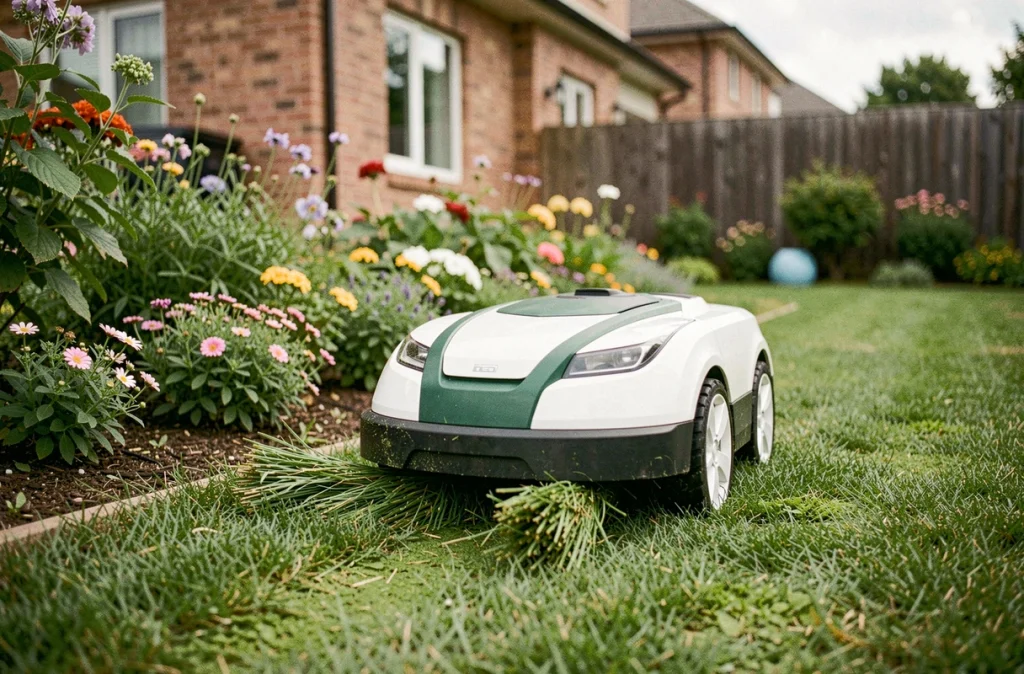
Comparing the price of a robotic lawn mower involves comparing navigation technologies, surface capabilities, and often underestimated additional costs. The price differences between an entry-level model and a premium model can exceed a factor of ten, and the purchase price alone does not reflect the actual budget over several seasons. This article measures these gaps and identifies the expense items that weigh the most.
True cost of a robotic lawn mower: what the purchase price does not show
The price displayed in stores or online only covers part of the expense. Several items are added from the first season and then recur regularly.
- The installation kit (peripheral wire, stakes, connectors) is sometimes sold separately, with a cost that varies depending on the length of wire needed to delimit the mowing areas and navigate around obstacles in the terrain.
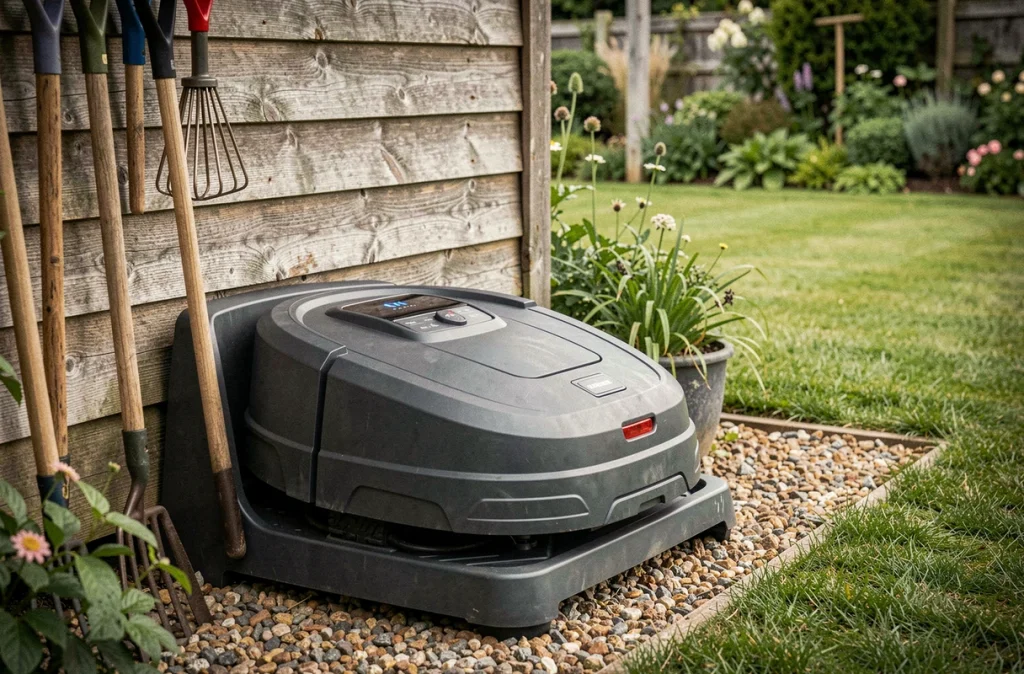
- The protective shelter, recommended to extend the lifespan of the charging station and the robot, represents a significant additional budget.
- Replacing the blades (several times per season depending on mowing frequency and lawn area) and changing the battery after a few years are the main recurring maintenance costs.
- Professional installation, charged extra by some retailers, can significantly increase the initial bill, especially in a sloped garden or one with several separated areas.
Before setting a budget, it is essential to add the price of the robot, accessories, potential installation, and consumables over the estimated lifespan. A dedicated guide on the purchase and price of a robotic lawn mower helps frame these different items according to your terrain configuration.
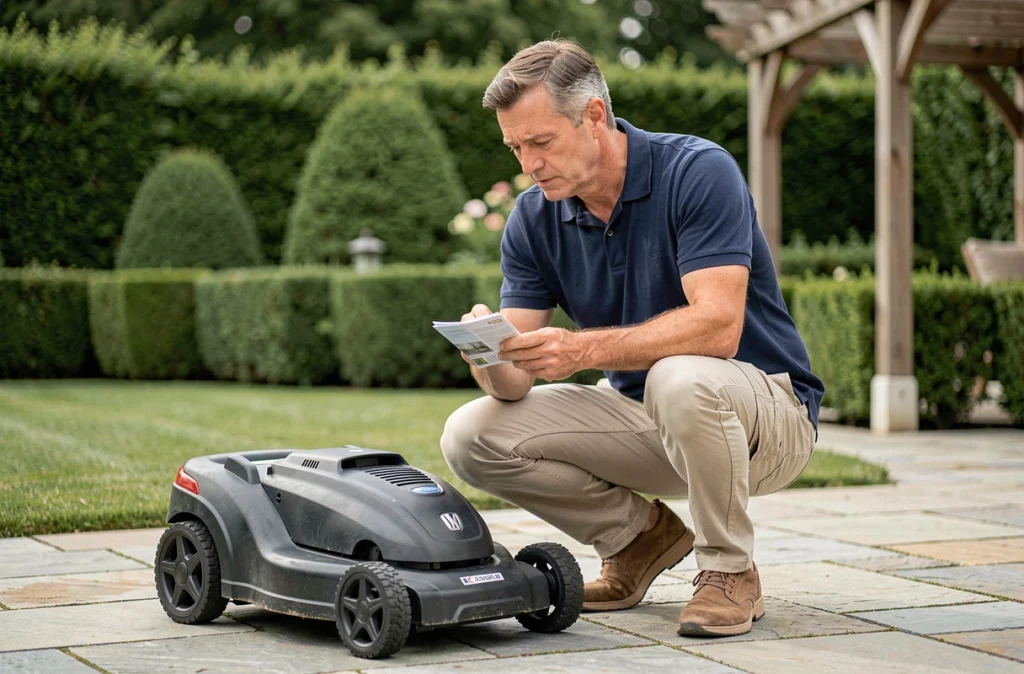
Comparative table of price ranges in 2025-2026
Data from current catalogs allow for the distinction of three segments. The table below summarizes the observed price ranges and associated characteristics.
| Range | Price Range | Indicative Area | Navigation | Connectivity |
|---|---|---|---|---|
| Entry-level | 400 to 800 euros | Small gardens | Random or peripheral wire | Limited or absent |
| Mid-range | 800 to 1,500 euros | Medium gardens | Peripheral wire, advanced sensors | Mobile app |
| High-end / Premium | 1,500 to over 5,000 euros | Large or complex terrains | GPS, RTK, AI vision or LiDAR | Complete (app, voice assistant) |
The gap between the low and high ends of the table is primarily explained by two variables: navigation technology and covered area. A model without peripheral wire, guided by GPS RTK or artificial vision, is consistently priced above 1,500 euros.
Navigation technology and its impact on the price of the robotic lawn mower
Navigation is the primary factor for price differentiation. Models with peripheral wire require physical installation (buried or laid wire, fixing stakes), which represents an initial cost and a maintenance constraint. In contrast, wireless robots equipped with GPS RTK, cameras, or LiDAR sensors eliminate this step but incorporate more expensive electronics.
A wireless robot costs more to purchase but eliminates the installation costs of the wire. In a terrain with several separate mowing areas, vision or satellite navigation avoids laying additional meters of wire, which can offset the initial price difference.
Lawn area and battery capacity
The area to be mowed determines the necessary battery capacity and, by extension, the price. A robot designed for a small lawn has a more modest battery, with a short charging time and frequent mowing cycles. For a large area, the battery must support long sessions, which increases the cost of the component and the robot.
The size of the garden remains the primary sizing criterion. Buying an undersized model forces the robot to make multiple trips to its charging station, which wears out the battery faster and degrades mowing quality.
Noise regulation and robotic lawn mowers: an underestimated legal risk
Most buying guides limit themselves to technical characteristics. However, the regulatory dimension deserves particular attention since the codification of abnormal neighborhood disturbance in Article 1253 of the Civil Code by the law n° 2024-346 of April 15, 2024.
This text allows for holding a property owner fully responsible if the repeated operation of a robotic lawn mower (nighttime hours, frequent passes) is deemed excessive compared to normal neighborhood inconveniences, even if the robot is used legally otherwise. The risk of civil litigation for noise nuisance therefore exists even with a device reputed to be silent.
Mowing hours: what municipalities impose in practice
Article R.1336-5 of the Public Health Code regulates any noise “by its duration, repetition, or intensity” without setting uniform national hours. In practice, the majority of municipalities continue in 2026 to establish indicative time slots for gardening devices.
Common time slots are approximately 8:30 AM – 12 PM and 2 PM – 7:30 PM on weekdays, 9 AM – 12 PM and 3 PM – 7 PM on Saturdays, and 10 AM – 12 PM on Sundays. The nighttime slot from 10 PM to 7 AM remains prohibited, including for robotic lawn mowers.
Programming a robot to mow at night or very early in the morning, a common practice among buyers who want to enjoy the lawn during the day, therefore exposes them to a violation of municipal orders and, since 2024, to enhanced civil action from neighbors.
Peripheral wire or wireless: what long-term extra cost
The choice between a wired model and a wireless model is not limited to the purchase price. The peripheral wire can break due to frost, a gardening tool, or a burrowing animal. Each repair involves locating the break, sometimes over several dozen meters of buried wire, and then soldering or replacing the section.
In contrast, a GPS or vision navigation robot has no wire to maintain, but its sensors and positioning module represent a higher replacement cost in case of failure. The choice therefore depends on the terrain configuration and tolerance for routine maintenance.
The total budget for a robotic lawn mower is influenced as much by consumables, installation, and regulatory compliance as by the displayed price. A model priced at 600 euros with peripheral wire on a small rectangular garden may end up being cheaper over five years than a premium model on a complex terrain, provided local time slots are respected and the replacement of blades and battery is anticipated.