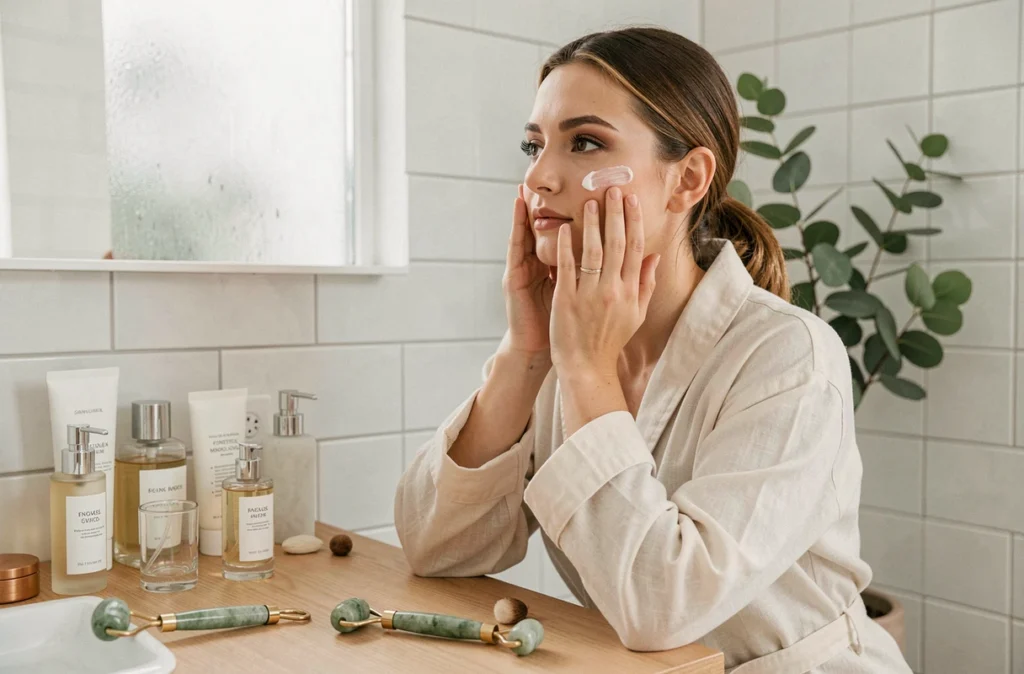
Collagen applied in a cream does not penetrate as far as the dermis. Ten-step routines weaken the skin barrier more than they strengthen it. The REACH restriction adopted in 2023 sets phased deadlines for microplastics in rinse-off and leave-on cosmetics. Talking about beauty trends every day without establishing these basics means piling on steps without knowing which ones actually benefit the skin.
Skin barrier and active overload: where dermatology draws the line
Using multiple serums, acids and masks in the same daily routine can overload the skin with active ingredients. Dermatologists warn of the risk of chronic irritation, redness and paradoxical dehydration when the skin barrier is exposed to too many active molecules at once.
Three to four carefully chosen products meet the real needs of most skin types. A gentle cleanser, a moisturizer suited to your skin type, daily sun protection and, in the evening, one targeted active ingredient (retinol, niacinamide or azelaic acid, depending on your needs). Anything beyond that is more about marketing than skincare.
This minimalist approach is gaining clinical credibility. It reduces the risk of sensitization, keeps costs down and makes it easier to identify a problematic product if a reaction occurs. Professionals who visit the Univers Beauté beauty website will find this thoughtful formulation approach applied to face and body care.
Collagen claims and marketing promises: read before you buy

Collagen is everywhere: creams, masks, dietary supplements and mists. The promise is always the same—to plump, firm and smooth. The biochemical reality is more nuanced.
The collagen molecule is too large to pass through the epidermis and reach the dermis, where it would play a structural role. When applied topically, collagen acts as a surface moisturizer. The perceived plumping effect comes from water retention at the surface, not from rebuilding dermal fibers.
That does not mean these products are useless. A collagen mask hydrates, soothes and can give skin a temporary glow. The problem lies in the gap between the promise and the actual effect. Low-molecular-weight hyaluronic acid, copper peptides or a stabilized retinoid do more to stimulate the body’s own collagen production than collagen applied to the surface.
Before adding a product to your routine, checking three things is enough:
- Does the INCI list the star active ingredient among the first ingredients or near the end (where its concentration is likely negligible)?
- Does the product claim an effect backed by independent clinical testing, or only by a consumer satisfaction self-assessment?
- Does the price reflect the actual formulation or the reputation of the ingredient highlighted on the packaging?
Cosmetics regulations in Europe: microplastics and PFAS in your daily routine
The composition of skincare products is changing under regulatory pressure, with direct implications for everyday beauty routines.
The REACH restriction on microplastics sets phased deadlines for cosmetics. Rinse-off products (shower gels, shampoos and exfoliants) are affected first. Leave-on products (creams, serums and makeup) have longer transition periods. In practice, some exfoliants containing synthetic microbeads already on store shelves will need to be reformulated.
In France, cosmetics containing PFAS (per- and polyfluoroalkyl substances) are subject to a recent ban. These compounds, used for their water resistance and smoothing texture, are found in foundations, concealers and lip products. Their persistence in the environment and the body justifies this restriction.

For a daily routine, distinguishing between product categories already affected and those still in transition makes it possible to make informed choices now, without waiting for the deadlines.
Daily beauty routine: follow trends or focus on useful steps
Skinimalism, clean beauty, glass skin, slugging—trends come and go every six months. Each brings its own dedicated products and multi-step routines. The fundamental question remains the same: an effective routine is built around your skin’s needs, not a social media algorithm.
Here are a few practical guidelines for deciding what deserves a place in your daily routine:
- Daily sun protection, with an SPF of at least 30, is the most thoroughly documented anti-aging step in dermatology, whatever the current trend.
- Double cleansing in the evening makes sense only if you wear makeup or have been exposed to urban pollution. If your bare skin has stayed indoors, one gentle cleanser is enough.
- Exfoliating actives (AHAs, BHAs) are best used two to three times a week, not daily, to avoid compromising the skin barrier.
- Light makeup formulated without PFAS or microplastics supports both skincare and aesthetic goals.
Self-care is not measured by the number of bottles on your shelf. Limiting your routine to steps with documented benefits saves time and money while protecting your skin from interactions between incompatible active ingredients. Trends come and go; skin physiology remains.