
Retirement profoundly changes the relationship with time, income, and relationships. In France, the regulatory framework surrounding this transition is evolving rapidly, with notable changes expected as early as 2027 regarding the combination of work and retirement. Preparing for retirement therefore goes beyond calculating a pension: it involves anticipating a new way of life where financial, social, and health parameters are redefined in parallel.
Combination of work and retirement: what changes concretely from 2027
Classic content on retirement rarely addresses the upcoming regulatory changes. The combination of work and retirement will be significantly tightened starting January 1, 2027 for the first retirements occurring from that date. The logic is no longer based solely on the full rate but now includes an age criterion.
Specifically, before the legal retirement age, returning to work may result in a total reduction of the pension. This point radically changes the decision-making process for individuals considering a small supplementary job in the early months of retirement. Several analyses published in July and August 2026 confirm this direction.
In return, contributions made under the combination of work and retirement should entitle individuals to a second pension after age 67. This is a new incentive for seniors who wish to extend their professional activity beyond this age, but it assumes the ability to wait several years before reaping a financial benefit.
The resources compiled on the site Le Journal du Senior detail these regulatory developments and allow for tracking adjustments over time as decrees are issued.

Managing expenses and health insurance after active life
The transition to retirement comes with a decrease in income that necessitates a review of spending structures. The health expenditure category, in particular, takes on increasing importance with age. Adapting one’s health insurance contract to actual needs (routine care, optics, dental, hospitalization) is one of the first concrete decisions to make.
Several points deserve verification at the time of departure:
- The portability of the company mutual insurance, which can be temporarily maintained under certain conditions but whose cost then increases
- The level of reimbursement for excess fees, often underestimated in individual contracts
- The assistance guarantees (home help, medical transport), which become relevant as autonomy evolves
Comparing contracts before the liquidation date prevents being left with inadequate coverage during the first months. Field feedback varies on the interest of immediately switching to a senior contract or temporarily maintaining existing coverage: the answer depends on medical profile and contribution level.
Physical activities and nutrition: two documented health levers
Regular physical activity after age 60 has broad medical consensus. Programs like ICOPE, promoted by the Pension Insurance, offer an assessment of physical, mental, and intellectual capacities to guide towards suitable practices.
The choice of activity matters less than its regularity. Walking, swimming, gentle gymnastics, or cycling: consistency outweighs intensity for maintaining joint mobility and cardiovascular capacity.
On the nutrition side, needs evolve with age. Muscle mass naturally decreases, which requires sufficient protein intake and more vigilant hydration. Available data do not allow for setting a universal threshold, but nutritional recommendations emphasize the diversity of intake rather than calorie restriction.
Mental well-being and cognitive maintenance
Retirement frees up time, but the absence of a daily structure can undermine psychological balance. Learning a language, taking online courses, joining a writing or reading workshop: these activities maintain cognitive plasticity and create regular appointments throughout the week.
Individuals who diversify their intellectual stimulation in the early years of retirement seem to better preserve their cognitive functions in the long term. However, the specific benefits of each type of activity remain difficult to isolate in existing studies.
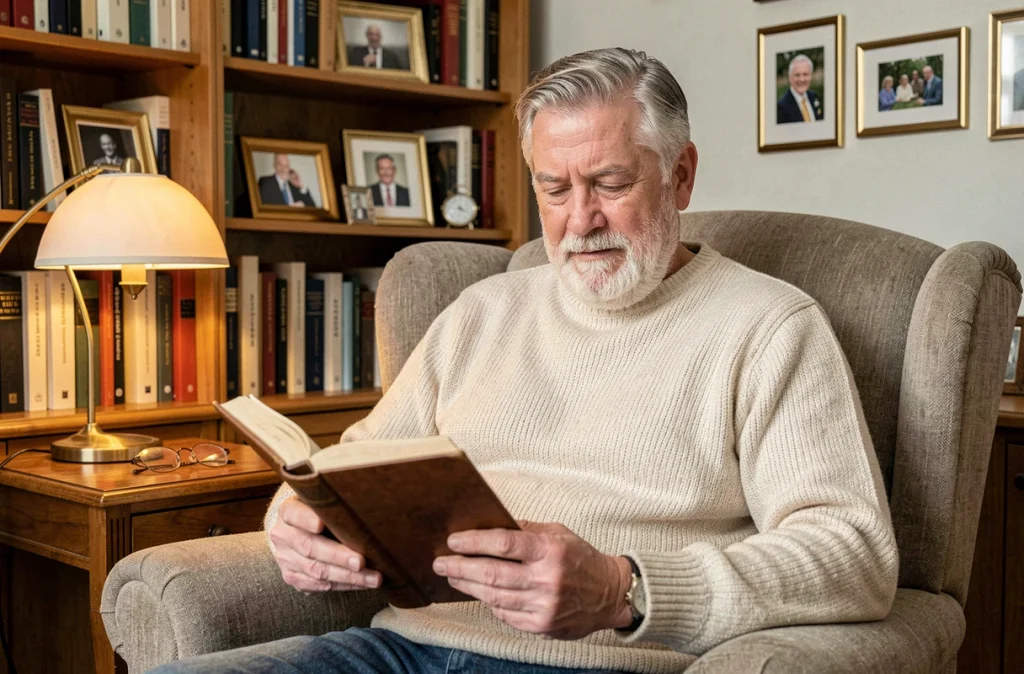
Isolation of seniors: a public health issue in 2025-2026
Severe relational isolation among those over 60 has become a well-documented subject in the past two years. Field feedback highlights three concrete responses that have shown results:
- Proximity visits organized by associations or local authorities, especially during summer periods
- Organized neighborhood initiatives, which structure regular links between residents of the same neighborhood or residence
- Digital support, which helps seniors maintain contact with their children and distant relatives
Regular social connections directly impact the physical and mental health of retirees. Isolated individuals face increased risks of cognitive decline and depression. This observation drives several public actors to integrate the fight against isolation into health prevention policies.
Joining an association, engaging in a collective activity, or simply accepting visit programs offered by one’s municipality represents a preventive gesture on par with physical activity.
Retirement remains a transition where each parameter (income, health coverage, activities, social connections) interacts with the others. The new rules for combining work and retirement applicable in 2027 add an additional variable to this decision-making process. Anticipating these adjustments, even partially, provides a margin of maneuver that the early months of retirement may not always allow to recover.