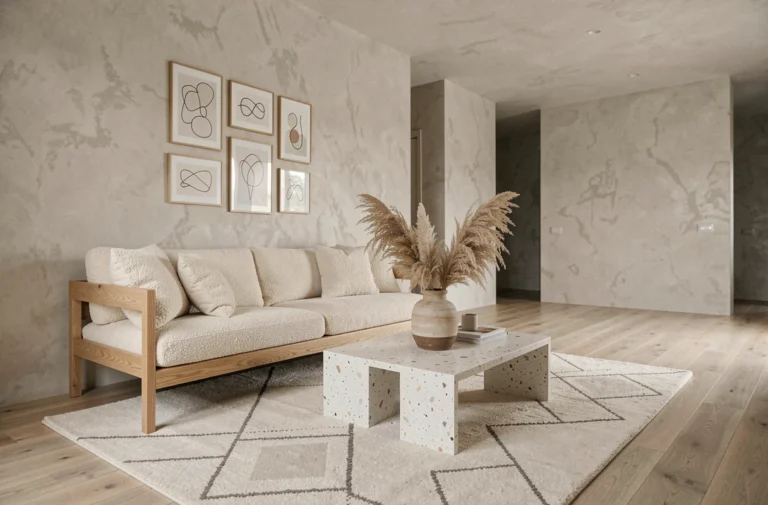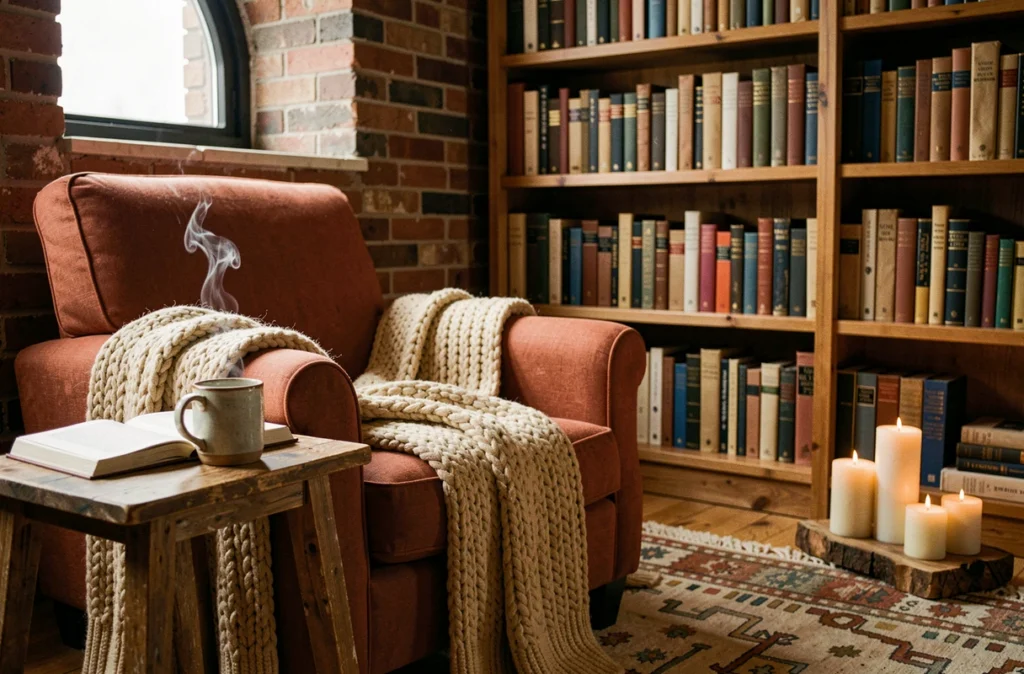
Creating a warm atmosphere at home is not just about piling cushions on a sofa. The comfort felt in a house depends on a set of parameters that range from the choice of materials to air quality, lighting, and the thermal performance of the building. Transforming your home into a cozy cocoon requires integrating these dimensions, not just decorating.
Thermal performance and real comfort: what happens behind the walls
The feeling of warmth in an interior does not solely depend on the temperature displayed on the thermostat. A poorly insulated wall radiates cold into the room, creating persistent discomfort even at a good ambient temperature. ADEME recommends a holistic approach combining insulation, heating, ventilation, and indoor air quality, rather than simply accumulating textiles or decorative objects.
Before investing in cozy decoration, it may be helpful to check the condition of the insulation in the walls and windows. A well-insulated interior retains heat without overheating, making every decorative arrangement more effective. A throw placed on a sofa in a drafty room remains a band-aid, not a solution.
Resources dedicated to home improvement are regularly updated on www.lescope.fr, where housing-related topics are addressed from several practical angles.
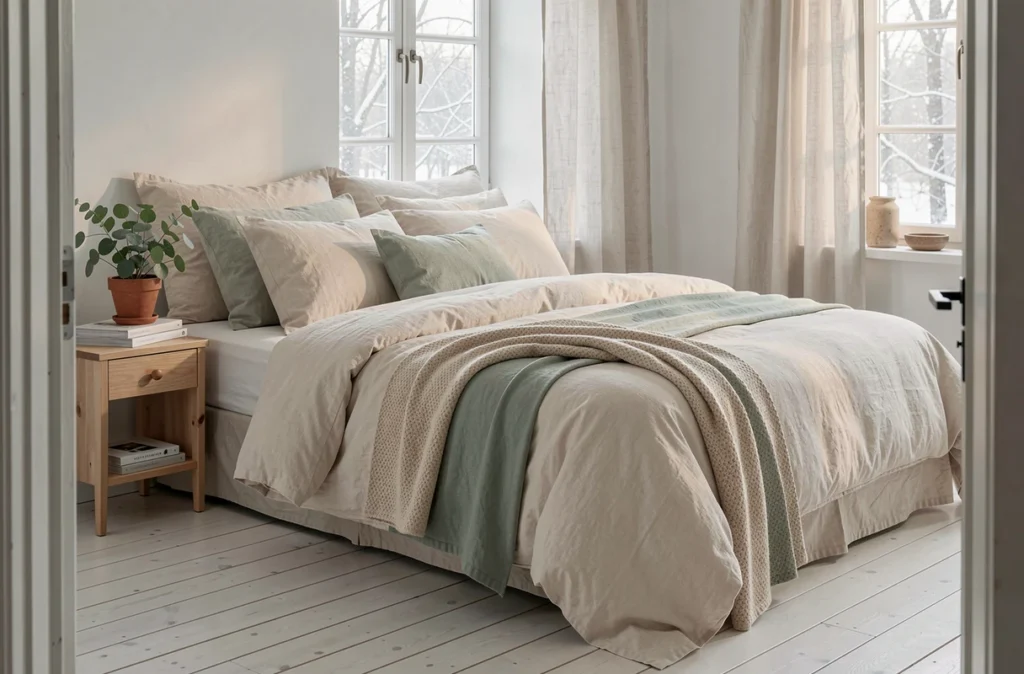
Lighting and cozy ambiance: layering light sources
Lighting is the most underestimated lever for transforming a living room or bedroom. A single ceiling light diffuses a cold, flat light that negates any decorative effort. The key lies in layering multiple sources at different heights.
Three levels of light in every room
A mood light (floor lamp, string lights, candle) placed on the ground or at mid-height creates a soft base. A reading lamp or wall sconce adds targeted functional lighting. A spotlight or pendant light completes the setup for moments when the room needs more clarity.
Opting for warm temperature bulbs, around 2,700 kelvins, radically changes the atmosphere of a space. Bulbs labeled “cool white” are suitable for workspaces, not for a warm living room. This technical detail often makes more difference than a change in wall color.
Dimmers and shadow zones
Installing a dimmer on an existing circuit is inexpensive and allows you to adjust the intensity according to the time of day. Leaving slightly darker areas in a room adds depth and enhances the feeling of intimacy. A uniformly lit space appears larger but also more impersonal.
Natural materials and indoor air quality
Wood, linen, wool, raw cotton: these natural materials are ubiquitous in cocooning decoration inspirations. Their visual and tactile appeal is real, but their choice also has concrete implications for the air quality in your home.
In France, construction and decoration products must carry a label indicating volatile pollutant emissions, ranging from A+ (very low emissions) to C (high emissions). This classification applies to paints, varnishes, adhesives, and floor coverings. Reading this label before purchasing flooring, wood panels, or wall coatings allows for an informed choice beyond appearance.
- A+ labeled paints emit significantly fewer volatile organic compounds than those classified as B or C, which is particularly important in a bedroom or enclosed space.
- Natural fiber coverings (seagrass, sisal, cork) provide a warm texture to the floor while generally exhibiting low emissions.
- Solid wood furniture, untreated with high formaldehyde adhesives, ages better and pollutes indoor air less than some particle boards.
Ventilation must remain active even in a very warm interior. Regularly airing out limits humidity and pollutants related to materials. A well-maintained mechanical ventilation system does not necessarily replace the daily opening of windows for a few minutes, even in winter.

Wood heating and warm ambiance: constraints to know
A wood stove or fireplace insert remains one of the most effective elements for creating a cocooning atmosphere. The radiant heat, crackling, and moving light of the flames engage multiple senses simultaneously. Field reports vary on this point depending on configurations, but the effect on perceived comfort is rarely disputed.
However, the rules governing wood heating vary by geographic area. Some areas covered by an atmospheric protection plan impose restrictions on older appliances or open fireplaces. Before installing or recommissioning equipment, checking local regulations avoids surprises.
- The moisture content of firewood directly influences combustion quality and fine particle emissions. Insufficiently dry wood (above the recommended threshold) produces more smoke and clogs the flue.
- Recent appliances labeled Flamme Verte offer significantly higher efficiency than traditional open fireplaces, with reduced pollutant emissions.
- Annual flue maintenance remains a legal obligation in most French municipalities.
Cocooning decoration in the living room: choices that really matter
The living room concentrates the majority of decorating efforts. Rather than listing accessories, a layered approach allows for structuring the space without overloading it.
The sofa is the starting point. Its seat depth, cushioning density, and upholstery fabric determine comfort far more than its color. A sofa that is too firm in a cocooning living room creates a sensory contradiction that neither cushions nor throws will truly correct.
On the floor, layering a long-pile rug over a hard surface (wood, tile) absorbs sound and insulates from the cold. Warm shades and neutral tones (terracotta, beige, sage green) dominate current palettes, but coherence matters more than trend. A well-assured vintage interior will always feel warmer than a space decorated according to a palette dictated by a social network.
The final layer concerns personal objects. Frames, books, and handmade ceramics add depth to the space. A warm interior is a lived-in interior, not a staged interior.