A sofa that we no longer love, a white wall that feels dull, a room that doesn’t resemble anyone in particular. Personalizing your living space often begins with this realization: the feeling that the interior no longer reflects what we experience daily. Transforming your interior doesn’t necessarily require major renovations. A few targeted choices regarding colors, materials, and layout are enough to radically change the atmosphere of a room.
Summer comfort and personalization: the link that decor ignores
Have you ever noticed that a south-facing living room becomes stifling by June? Before choosing a new curtain or repainting a wall, the question of thermal comfort deserves to be addressed. According to data published on data.gouv.fr, nearly 45% of energy performance diagnoses (DPE) conducted since July 2024 classify summer comfort as insufficient.
This figure reveals a common blind spot: we decorate without considering heat. Qualitel recommends examining the orientation of rooms, the type of glazing, and solar protections before any intervention. An exterior shade changes the ambiance more than a decorative cushion when temperatures rise.
In practical terms, this means that personalizing an interior also involves technical choices. A well-sized roller shutter, a ceiling fan, or effective night ventilation contribute as much to well-being as a beautiful color palette. Social landlords are experimenting with adjustable solar protections and different insulations to adapt each building, rather than applying a one-size-fits-all solution. To find decor inspiration on Nuxo, this holistic approach is a good starting point.

Colors and natural materials to transform a room
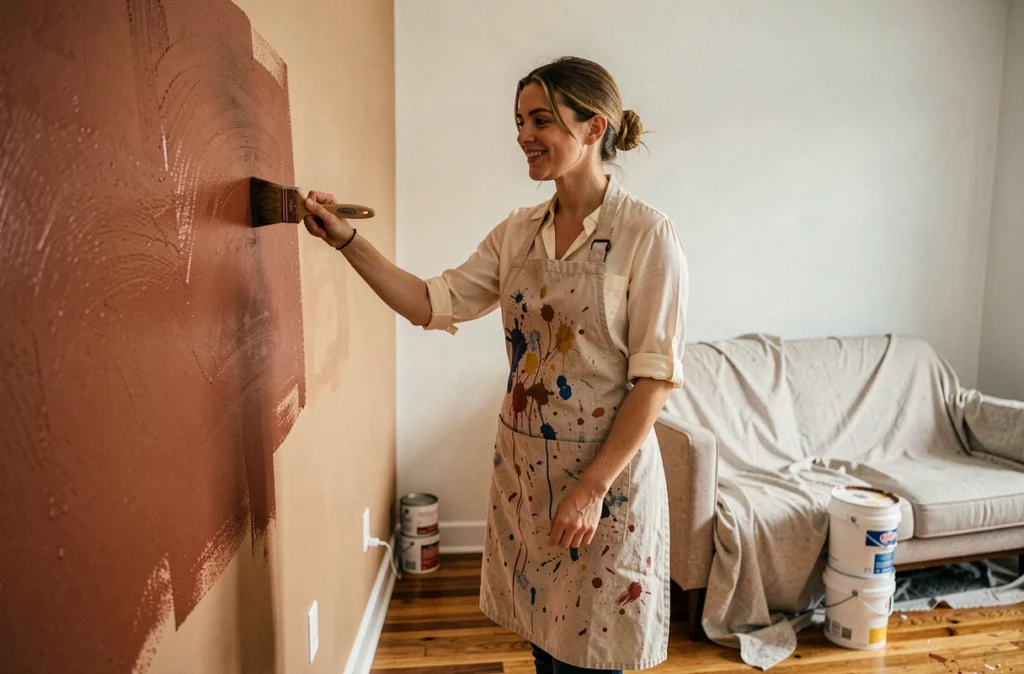
Color is the most accessible lever for altering the perception of a space. A wall painted in a bold hue (terracotta, sage green, navy blue) is enough to anchor a living room or bedroom in a specific ambiance. No need to repaint all four walls: one colored wall structures the entire room.
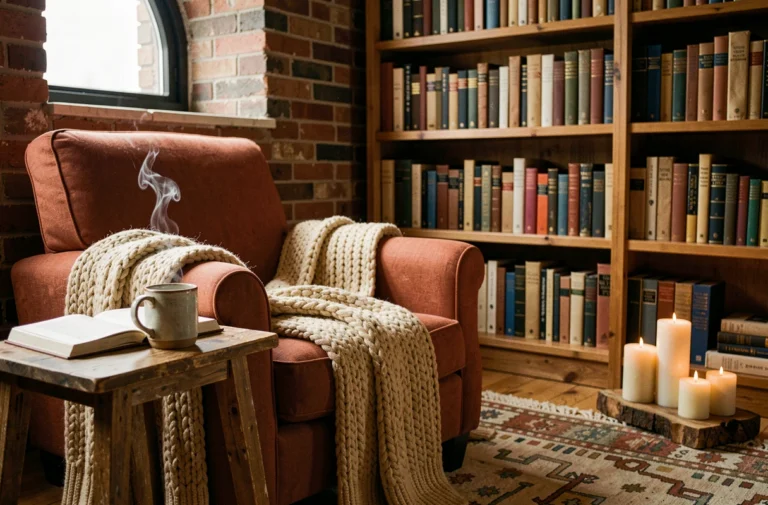
The choice of material is as important as the hue. Raw wood on a piece of furniture or a shelf brings warmth effortlessly. Natural stone, even on a small element (tabletop, decorative tray), introduces a texture that industrial furniture cannot replace.
Combining textures without overloading
The classic pitfall is accumulation. A thick wool rug works well on a smooth floor but loses its effect on carpet. The principle is simple: each texture must contrast with the surface it rests on.
- On a hard floor (tile, varnished parquet), a woven rug or a hide provides immediate tactile contrast.
- On a solid fabric sofa, a wrinkled linen or corduroy cushion creates relief without weighing it down.
- On a smooth wall, a slatted wood panel or a wall weaving adds depth without reducing visual space.
The idea is not to check all the boxes but to choose two or three combinations that work well together.
Arranging a living room or bedroom without changing everything
Moving a piece of furniture costs zero euros and can transform the flow in a room. Have you ever tried turning your sofa 90 degrees? In many living rooms, the sofa faces a screen by reflex. Turning it towards a window or a bookshelf corner redefines the use of the space.
The arrangement of furniture determines how we live in a room, not just how we look at it. An armchair placed near a source of natural light becomes a reading nook. A side table slipped between two seats creates a conversation area.
Creating zones in an open space
In open living areas, the lack of visual separation often gives a blurred impression. A few concrete solutions can help structure the space without partitioning:
- A differently sized rug under the dining area and under the living area marks two distinct territories.
- A low shelf (at seating height) separates without blocking light.
- A change of wall color, even subtle, signals the transition from one zone to another.
These gentle separations work better than a screen, which often ends up relegated to a corner.

Wall decoration and lighting: the details that really matter
Lighting is the most underestimated parameter in interior decoration. A central ceiling light diffuses flat light that flattens volumes. Replace it (or complement it) with two or three sources positioned at different heights: a floor lamp, a wall sconce, a discreet string of lights.
Multiplying low-level light sources transforms the atmosphere of a living room in the evening. Low lighting highlights textures, deepens shadows, and makes the space warmer than overhead lighting.
Dressing walls without drilling everywhere
Empty walls give a feeling of incompleteness, but a gallery of frames aligned with a string is not the only option. A large mirror placed on the floor against a wall visually enlarges the room. An accumulation of small mismatched frames, at different heights, tells a story.
Wood, again, also works in wall decoration. Vertical battens fixed to a wall create a relief effect at a low cost. This type of wooden wall covering can be installed in a day with simple fixings and radically changes the character of a bedroom or an entryway.
Ultimately, personalizing a living space relies less on a budget than on attention to details that change daily perception. A well-chosen shade, a bold color, a moved piece of furniture, a rethought lighting: these simple gestures, taken one by one, ultimately compose an interior that reflects those who inhabit it.