
Receiving mail in the name of someone who no longer lives at your address is a common situation after a move or a change of tenant. Administrative letters, reminders, bank correspondence: the mailbox fills up with items intended for a third party, with no obvious solution to put an end to it. The French postal framework provides several levers, but their effectiveness depends on details that most guides overlook.
Identification of the mailbox: an unknown lever to block delivery
Before looking for ways to return the mail, it is essential to understand a mechanism upstream. The Post is not required to deliver mail if the mailbox is not sufficiently identifiable. In collective housing, when no name allows linking the mailbox to a specific recipient, delivery can be disabled.
This point is often confused with a legal obligation to display one’s name. In reality, the absence of a name on the mailbox is not an offense. It is a condition of postal service: if the mail carrier cannot identify the recipient, they do not drop off the item.
Specifically, placing only your own name (and removing that of the former occupant) sends a clear signal to the mail carrier. Items addressed to the third party will then be returned to the sorting center. This approach is more effective than simply sticking a label saying “does not live here anymore,” because it directly impacts the delivery process, not the goodwill of the carrier. The procedure to stop mail from a third party largely relies on this principle of identification.
NPAI mention on the mail: how to use it correctly
The mention NPAI (N’habite Plus à l’Adresse Indiquée) is the most well-known recourse. You write this mention on the unopened envelope, then you place it in a street mailbox or directly at the post office.
One detail changes the effectiveness of this approach: the mail must be returned unopened. Opening or removing correspondence addressed to third parties constitutes a criminal offense. The law does not distinguish between good and bad intentions: even out of curiosity or to find the address of the former occupant, opening the item is prohibited.
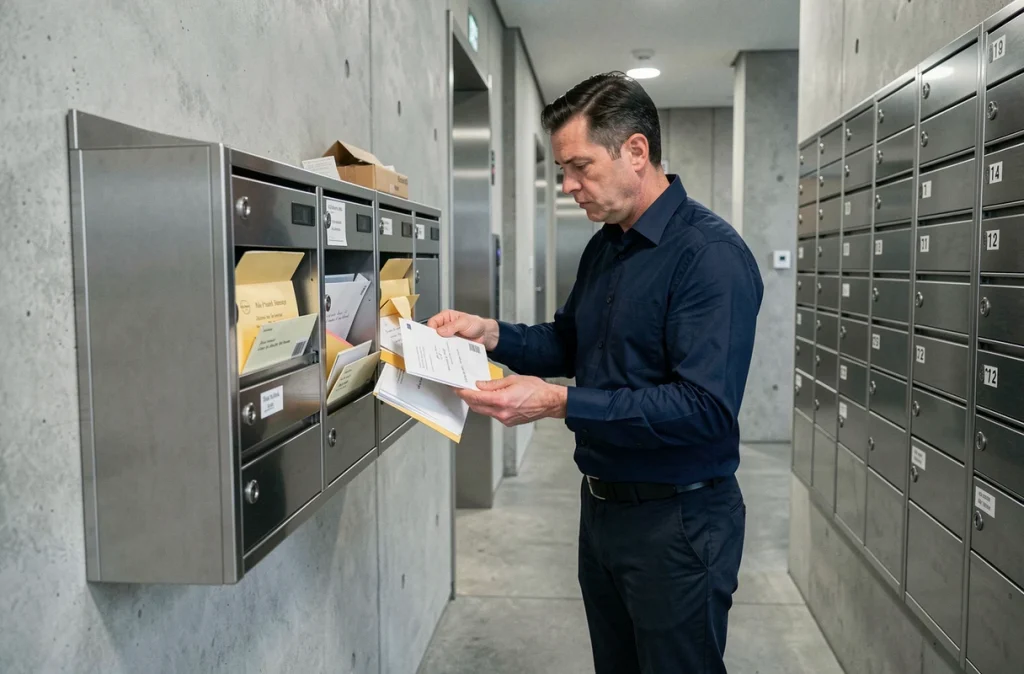
Field returns vary on this point: some post offices process items marked NPAI quickly, while others let them accumulate without updating the address database. When the sender is an organization that uses outdated files (insurance companies, credit organizations, advertising catalogs), mail may continue to arrive for months despite returns.
Persistent mail: when the NPAI mention is not enough
If items continue to arrive after several NPAI returns, the problem generally lies with the sender. An incorrectly addressed piece of mail is not automatically resolved by a simple postal return. The sender must update their database, which they do not always do after just one return.
Several complementary actions exist at this stage:
- Contact the identifiable sender directly (bank, mutual insurance, administration) to report that the person no longer resides at this address. A simple letter or a call is sufficient in most cases.
- File a report with the town hall or local administration, which can, in some cases, relay the information to local postal services.
- If the former occupant can be reached (former tenant with whom you have kept in touch, previous owner), ask them to subscribe to a mail forwarding contract with La Poste. This service redirects all items to the new address for a defined period.
The forwarding contract can only be subscribed to by the person concerned or their representative. You cannot request the forwarding of a third party’s mail on their behalf.
Registered mail and legal effects of an incorrect address
The case of registered mail deserves special attention. A registered letter addressed to someone who no longer lives at your address does not bind you in any way, but it can have consequences for the absent recipient.
A legal notification sent to the wrong address can be declared null and void by a judge. Recent decisions remind us that an address error in a procedural act (seizure-attribution, summons) can invalidate the entire process. For the sender, this is a real risk. For you, this means that refusing the item and returning it is the best protection: you do not become responsible for the non-receipt by the true recipient.
Never sign a receipt for a registered letter that is not intended for you. If the mail carrier presents it by mistake, refuse it. Refusing a registered letter addressed to a third party protects you legally.

What La Poste provides (and what it does not guarantee)
La Poste treats NPAI returns as one-time reports. It has no obligation to permanently block delivery in the name of a former occupant. Each new sender who sends an item to this address can restart the cycle.
In practice, the most sustainable solution combines three elements: a mailbox clearly identified with your name only, systematic NPAI returns on each item received, and direct contact with recurring senders. No single action guarantees the complete cessation of a third party’s mail, but the combination of these actions gradually reduces the volume until it ceases.
The available data does not allow for an average timeframe before the complete disappearance of items. Some advertising mail, fed by commercial files resold between companies, can persist well beyond a year. For these cases, a complaint to the CNIL remains possible if the sender refuses to remove the address from their database after notification.