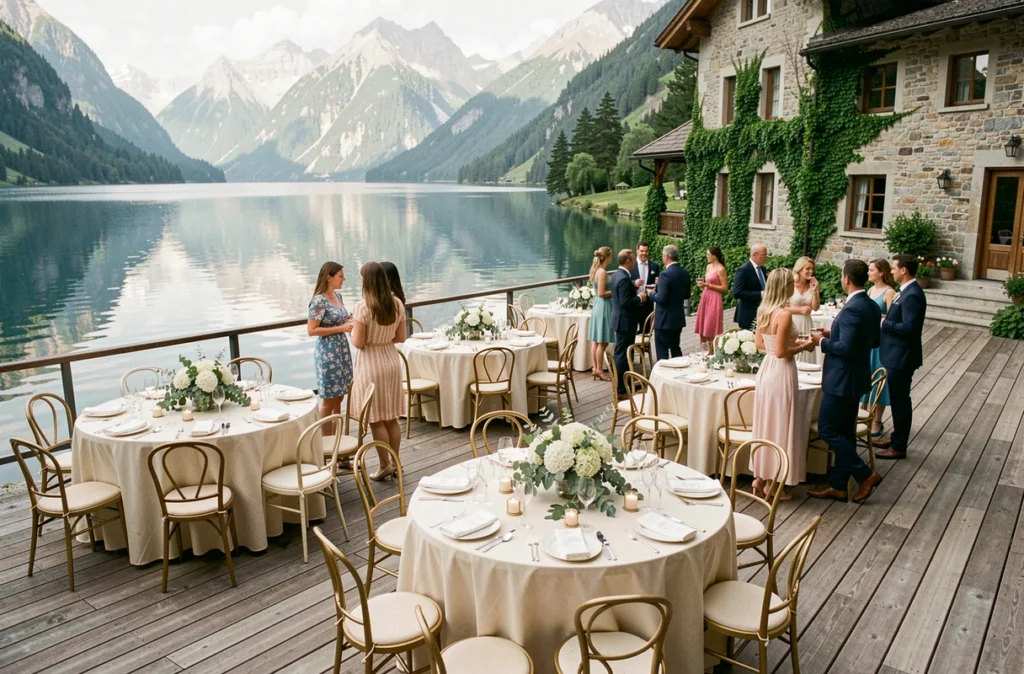
Renting an exceptional lakeside house for a birthday or private party is increasingly appealing to organizers. The natural setting, the privatization of the venue, and the available space are strong arguments. However, between the promise of an idyllic backdrop and the reality of a successful event, several technical and regulatory constraints need to be identified before signing a contract.
Noise constraints by the lake: what the law really imposes
Noise is the primary cause of disputes between event organizers by the lake and local residents. The regulations on this point are precise and apply to both enclosed venues and open spaces.
In France, events featuring amplified sound are governed by the Public Health Code and the Environmental Code. Sound level limits apply over measurement durations of fifteen minutes, whether the venue is enclosed or open.
For venues that usually host activities involving amplified sound, the Environmental Code requires a study of the impact of noise disturbances (EINS). This study must be updated if there are changes to the premises, activities, or sound system. A property presented as “private” is not exempt from this obligation as long as it regularly hosts receptions.
Disturbances are not evaluated solely on a national decibel threshold. Their duration, repetition, and intensity are also taken into account. Municipal or prefectural orders may impose stricter end-of-evening hours than national regulations. Before signing a rental contract, checking the local orders applicable to the lake’s municipality helps avoid unpleasant surprises on the day of the event.
A provider like Maison Bordelac incorporates these parameters into the management of its estate, simplifying preparation for the organizer.
Choosing a lakeside estate or villa: the criteria that really matter
The choice of a venue is not just about the beauty of the view. Several technical elements determine whether a house, chalet, or lakeside gîte can truly host a quality event.
- Logistical access: an isolated property by the lake can pose difficulties for catering deliveries, sound equipment setup, and guest parking. Check the width of access paths and parking capacity before making any reservations.
- Electrical supply: exceptional houses in rural areas sometimes have limited electrical power. A generator may be necessary to power lighting, sound systems, and kitchen equipment simultaneously, which generates additional noise and costs.
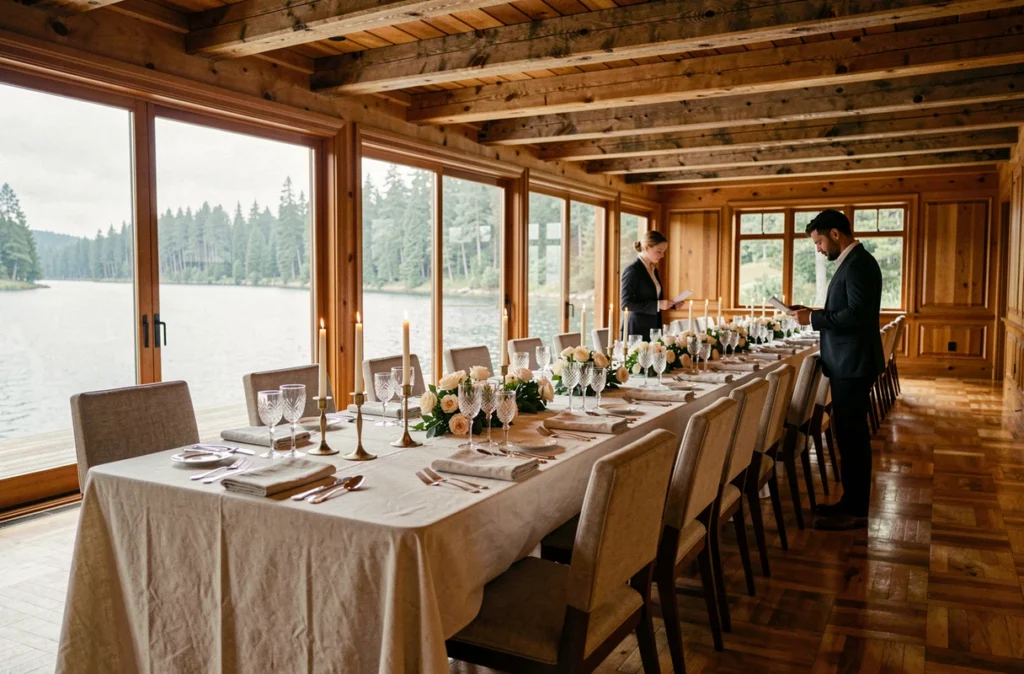
- The configuration of indoor and outdoor spaces: a lakeside event relies on the outdoors, but the weather always necessitates a covered backup plan. Prefer a venue with a sufficiently large indoor reception room to accommodate all guests.
- Sanitary facilities: for an event exceeding a few dozen people, the facilities of a private house are rarely sufficient. Renting portable restrooms is common but should be anticipated.
These operational details separate a smooth event from a party marred by practical issues. It is better to check directly with the owner about the actual capacity, asking for the number of electrical outlets, parking spaces, and available restrooms.
Outdoor event by the lake: declarations and insurance
Organizing a private party in an exceptional setting does not exempt one from administrative formalities. Any event gathering the public may require prior declaration to the town hall or prefecture, depending on the number of participants and the nature of the event.
For large-scale events, a specific declaration is required. The threshold and procedures vary by municipality. Some municipalities require a complete file including a security plan, even for parties presented as private when they exceed a certain number of guests.
Event liability insurance is another often-overlooked point. The homeowner’s property insurance typically does not cover damages related to an event organized by a third party. Specific insurance, taken out by the organizer, protects against bodily injuries, property damage, and neighborhood claims.
The special case of fireworks and lanterns
By the lake, the temptation for fireworks or flying lanterns is common. Flying lanterns are prohibited in many municipalities due to the fire risk. For fireworks, a prefectural authorization is generally required, along with distance conditions from homes, wooded areas, and protected water bodies.

Privatizing a lakeside venue: anticipating hidden costs
The displayed price for renting an exceptional lakeside house reflects only part of the actual budget. Several additional items can represent a significant portion of the total cost.
Post-event cleaning and restoration of the outdoors (lawn, terrace, banks) often incurs separate billing or a deduction from the deposit. Rental contracts generally specify an expected condition for return, sometimes photographed before the event.
Compliance sound systems, rental of additional furniture (tables, chairs, tents), security services for events exceeding a certain number of participants: each item adds to the bill. A detailed budget forecast, established during the venue scouting phase, helps avoid overruns.
The setting of a lake in Savoie, Annecy, or another popular area often justifies a high rental price during the peak season. Shifting the event to a weekday or outside the summer period reduces rental costs and facilitates the availability of local providers (caterer, photographer, DJ).
Checking noise, administrative, and logistical constraints in advance transforms an appealing project on paper into a party that guests will remember for the right reasons.