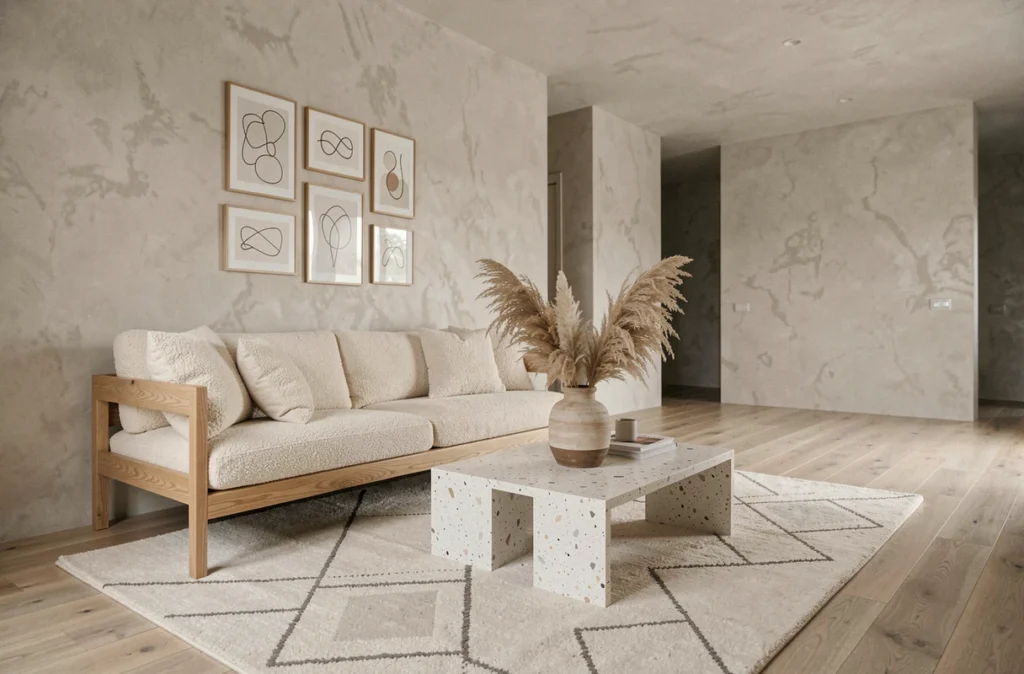
The decorative palettes have shifted. After several seasons dominated by cold grays and clinical whites, French interiors are moving towards earthy tones, raw materials, and furniture designed for shrinking spaces. This fundamental transition reshapes decoration choices far beyond a simple change of color on the walls.
Earthy palettes and deep colors: the break from all-gray
The retreat of cold grays in favor of soft ochres, deep greens, and warm browns is not a seasonal whim. Several trend analyses for 2026 describe a fundamental shift towards earthy palettes, driven by a search for visual warmth in living spaces.
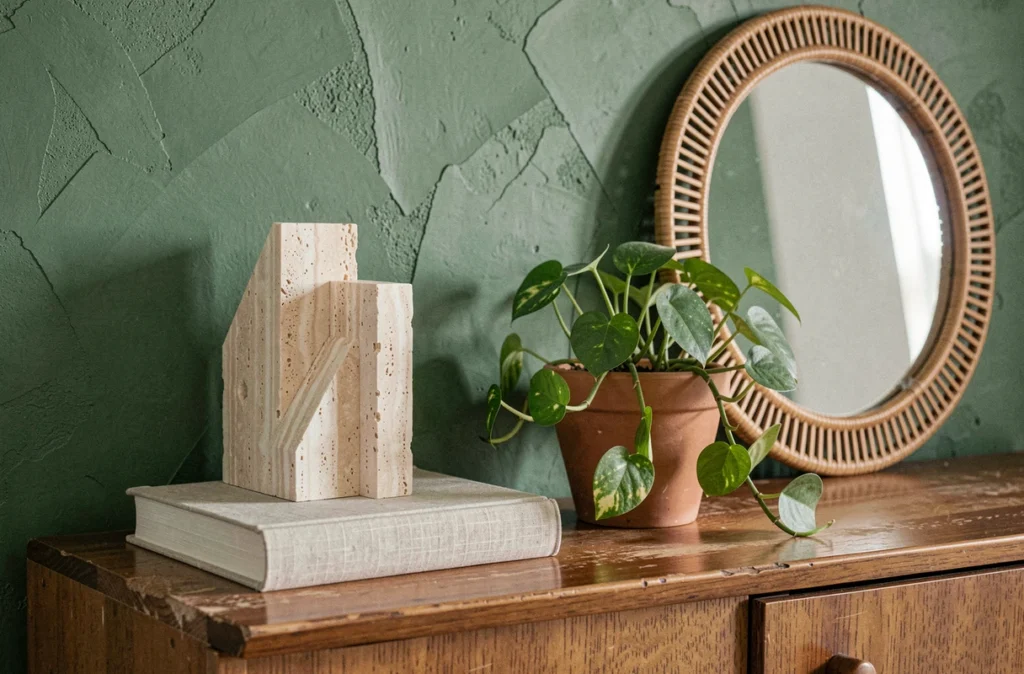
For an already very neutral interior, the transition can be made in touches without starting over. An accent wall in sage green or terracotta is enough to change the perception of an entire living room. Textiles (cushions, throws, curtains) in evolved greige or warm brown tones can anchor this new palette without requiring renovations.
The delicate point remains natural light. A soft ochre that radiates in a south-facing room can overwhelm a poorly lit space. Testing a paint sample on a surface of at least one square meter, observed at different times of the day, avoids unpleasant surprises. Field reports vary on this point: some colorists recommend two test coats, while others prefer calibrated digital color samples on screen.
Those who wish to discover decor on Happy Space will find combinations of earthy shades suitable for different room configurations.
Modular furniture: a concrete response to small spaces
Modular and multifunctional furniture has changed its status. Long perceived as a compromise for studios, it now appears in the collections of many brands as a pragmatic response to the reduction of living spaces. Extendable tables with integrated storage, sofas with storage compartments, foldable desks: the progression of this type of product is continuous.
The interest goes beyond space-saving. A modular piece of furniture changes the function of a room depending on the time of day. A console table that unfolds into a dining table transforms a living room into a dining room without additional furniture. This principle changes the very logic of interior decoration: we no longer decorate fixed rooms, we arrange spaces with variable geometry.
Three criteria deserve attention before investing in modular furniture:
- The quality of the mechanisms (hinges, slides, lifts) determines durability. A piece of furniture that is transformed daily wears out faster than a static piece.
- Weight matters: a quality sofa bed often weighs heavily, complicating its movement on certain floor coverings.
- The aesthetic at rest remains the decisive test. If the folded furniture looks like a compromise, it will end up being left unfolded permanently, negating all modular benefits.
Raw materials and textures in living room decoration
Wood, stone, raw linen, and artisanal ceramics are gaining ground in living spaces. This trend extends the retreat from smooth and uniform finishes that characterized contemporary design in previous years. Visibly textured materials replace perfectly homogeneous surfaces.
In a living room, combining different materials creates a visual depth that color alone does not produce. A patinated wooden coffee table top placed on a black metal structure, combined with a jute rug and washed linen cushions, layers several tactile registers without overloading the space.
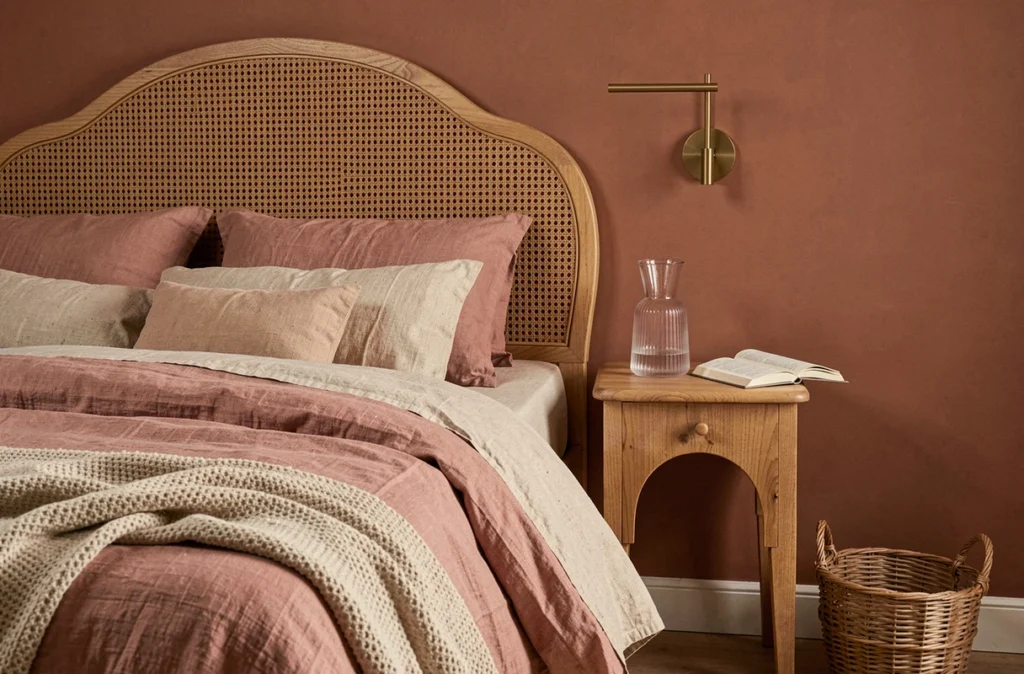
The main constraint of these natural materials is maintenance. Untreated raw wood marks easily, linen wrinkles, and porous stone absorbs stains. An invisible matte varnish or natural wax protects the wood without altering its raw appearance. For linen, the wrinkled look is part of the style: trying to iron it goes against the initial aesthetic choice.
Unique decorative objects rather than mass-produced accessories
Personalization of the interior increasingly moves away from the accumulation of identical decorative objects bought in bulk. Current trends value unique or small series pieces: artisan ceramics, mirrors with irregular shapes, lighting made from recycled materials, and vintage finds.
This change in approach alters the relationship to the decoration budget. A few carefully chosen objects can sometimes cost as much as a collection of mass-produced accessories, but a unique object structures a room better than ten interchangeable accessories.
The common pitfall is to fall into the accumulation of “unique” pieces that, when combined, create visual chaos. Two to three strong objects per room are sufficient. The rest of the space benefits from remaining clear, allowing the furniture and existing colors to breathe.
- A large stoneware vase placed on the floor anchors a corner of the living room better than a shelf overloaded with small knick-knacks.
- A mirror with organic contours, placed facing a source of natural light, visually enlarges the space while serving as a decorative focal point.
- Handcrafted lighting made from natural fibers (rattan, bamboo, wicker) adds texture to the ceiling, an area often overlooked in interior decoration.
Interior decoration in 2026 is characterized by a refocusing on material, color, and function. Earthy palettes warm up spaces inherited from all-gray, modular furniture responds to real surface constraints, and unique objects take precedence over standardized accessories. The common thread remains coherence: each added element must interact with those already present, not compete with them.