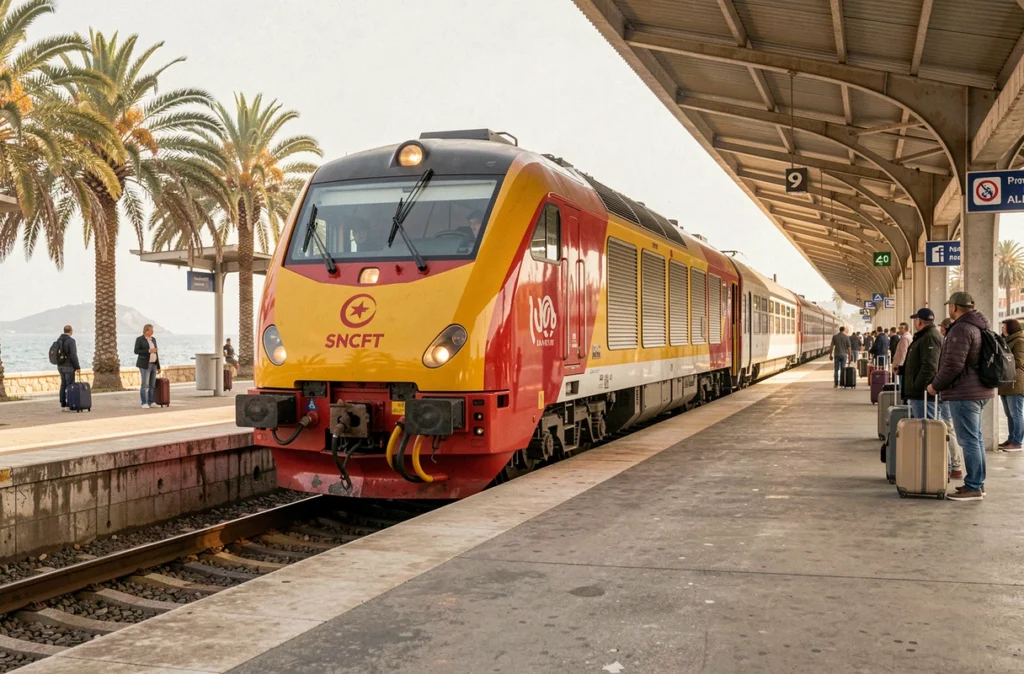
Tunis and Monastir are separated by about 160 kilometers in a straight line, but the actual distance by road is around 170 kilometers using the coastal highway. This route runs along part of the eastern coastline of Tunisia and passes through or around several cities, including Hammamet and Sousse. Depending on the mode of transport chosen, the travel time varies significantly.
A1 Highway between Tunis and Monastir: the route to know
The most direct route between the two cities takes the A1 highway that heads south towards Sfax. The journey usually starts from the center of Tunis or from Tunis-Carthage Airport, then goes towards Hammamet before following the coast to Sousse, the last major city before Monastir.
This highway route is toll-based. The sections are well-maintained, and the signage clearly indicates the exits for Monastir and its international airport, Habib-Bourguiba. By car, under normal traffic conditions, it takes between one and a half to two hours to cover the distance between Tunis and Monastir, depending on the exact starting point and the traffic density at the capital’s exit.
The A1 highway remains the fastest and most predictable route to connect the two cities. Alternatives via national roads easily add an hour to the journey, with no particular gain except for travelers wishing to stop in the villages of Cap Bon.
SNCFT Train Tunis-Monastir: frequency and travel time
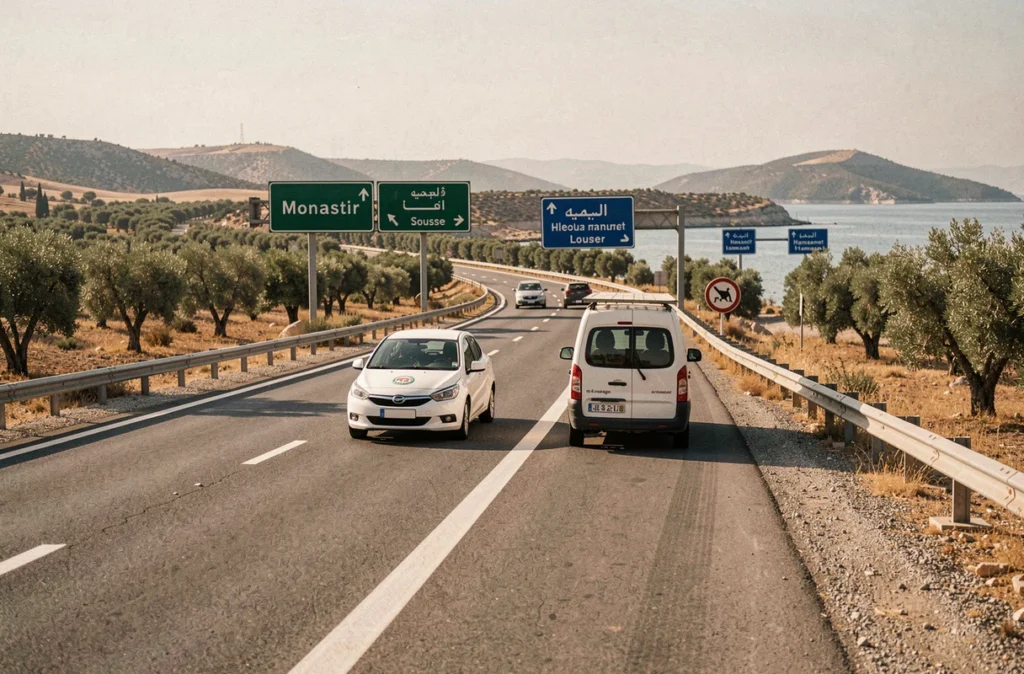
The National Company of Tunisian Railways (SNCFT) operates a line connecting Tunis to Monastir via Sousse. This train journey lasts about two and a half to three hours, depending on the type of train and intermediate stops.
The train service allows for same-day round trips, making it a viable option for those staying in Tunis and wishing to visit Monastir without staying overnight. Day trains run regularly along the coast.
The SNCFT has experienced occasional disruptions on some long-distance lines, but normal traffic resumption has been announced on the main national connections. The ticket price remains very affordable compared to other modes of transport, which explains the train’s popularity among local travelers and budget tourists.
What to anticipate at the station
The departure station in Tunis is the central station, located in the city center. In Monastir, the station is close to the center and the medina. Tickets can be purchased directly at the counter on the day of departure, but it is advisable to arrive early during peak periods, especially in summer.
Taxi and private transfer to Monastir: price and comfort compared
Long-distance taxis and private transfer services are the third common option. Several operators offer vehicles with drivers from Tunis, Tunis-Carthage Airport, or hotel areas to Monastir.
- The shared taxi (louage) departs from the louages station in Tunis to Sousse or Monastir. The fare is shared among passengers, which reduces the cost per person, but departure only occurs once the vehicle is full.
- The private taxi offers a door-to-door ride without intermediate stops. The price is significantly higher than the louage or train, but the comfort and scheduling flexibility make it worthwhile for families or groups.
- Online transfer services allow for a fixed price in advance. Some include air conditioning, Wi-Fi, and an English or French-speaking driver, which simplifies organization for foreign travelers.
The louage remains the cheapest option after the train to reach Monastir from Tunis. The private transfer is mainly justified for an early morning flight from Monastir Airport when other options are not yet operating.
Car rental in Monastir or Tunis: autonomy on the route
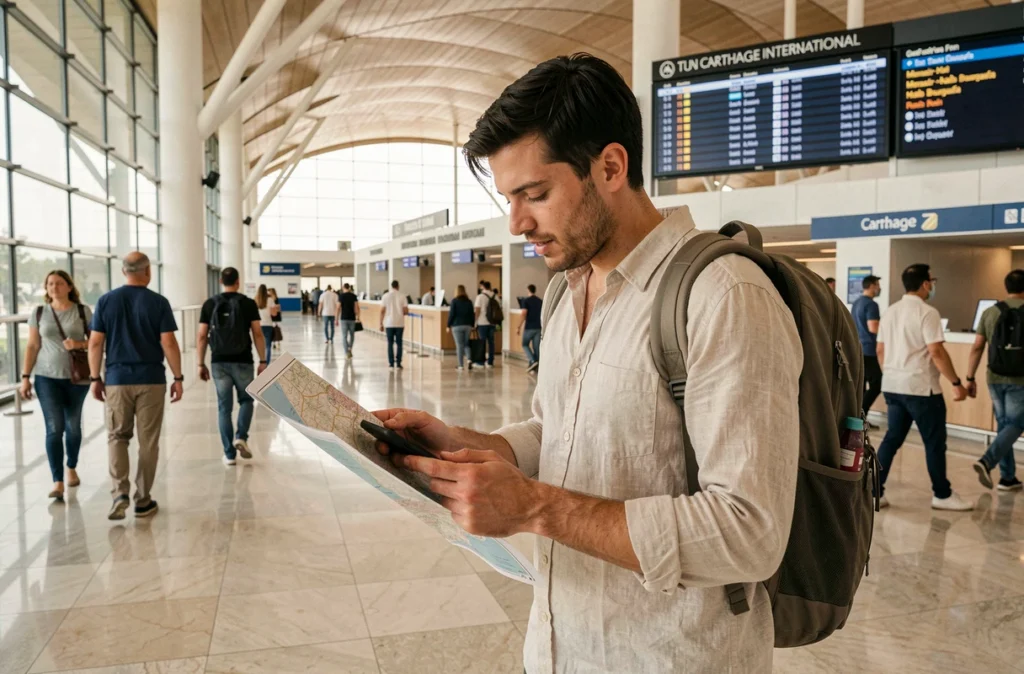
For travelers planning to move between several Tunisian cities, car rental offers the greatest freedom. International and local agencies are located at Tunis-Carthage and Monastir-Habib-Bourguiba airports, as well as in city centers.
The rental company Sixt, for example, has recently established itself in Tunisia targeting the main tourist areas, which expands the available options. Other local brands offer competitive rates, especially when booked in advance.
Points of caution on the highway
- Tolls are paid in Tunisian dinars, in cash. Be sure to have change before taking the highway.
- Night driving between Tunis and Monastir is discouraged by several guides due to uneven lighting on certain sections.
- Parking in central Monastir and near the medina is generally easy outside of the high summer season.
Renting a vehicle also allows for stops in Hammamet or Sousse along the way, two seaside towns located between Tunis and Monastir that are worth a visit.
Which transport to choose according to your situation
The choice depends on three criteria: budget, departure time, and number of travelers. The train is suitable for tight budgets and solo travelers who have time. The louage offers a good compromise between cost and speed. Private transfer or taxi is aimed at those who need to reach Monastir Airport for an early flight when public transport is not operating.
Car rental makes the most sense for a multi-day stay with planned trips to Sousse, Sfax, or Cap Bon. For a one-way trip from Tunis to Monastir without other stops, the cost-simplicity ratio favors the train or the louage.
The distance between the two cities, modest on a Tunisian scale, makes Monastir an easily accessible destination from the capital, regardless of the chosen mode of transport.