A swimsuit made of elastane loses or gains tension based on three factors: the water temperature in which it is submerged, the duration of the stretch applied to the fibers, and the fabric composition. Understanding these mechanisms allows you to relax a too-tight swimsuit without damaging its structure, and especially without having to replace it.
Elastane and deformation: what the fiber can really accept
Most swimsuits contain elastane (also known as spandex or Lycra depending on the brands). This synthetic fiber can stretch and then return to its original shape, but this ability to return is not unlimited.
When a damp fabric is stretched at a warm temperature, the polymer chains slide slightly against each other. If the stretch is maintained long enough, part of the deformation becomes permanent. This is exactly the principle used to gain a bit of ease on a too-tight swimsuit.
Conversely, excessive heat irreversibly destroys elasticity. A tumble dry or soaking in boiling water does not relax the swimsuit: it breaks the elastic fibers. The fabric then becomes soft in some areas and rigid in others, which worsens discomfort. There are several ways to find out how to relax a swimsuit that is too small while respecting the fiber rather than destroying it.
Relaxing a swimsuit in warm water: step by step method
The most reliable technique involves a controlled soaking followed by manual stretching. It works on elastane and nylon-based fabrics, which represent the vast majority of swimsuits sold.
Soaking and manual stretching
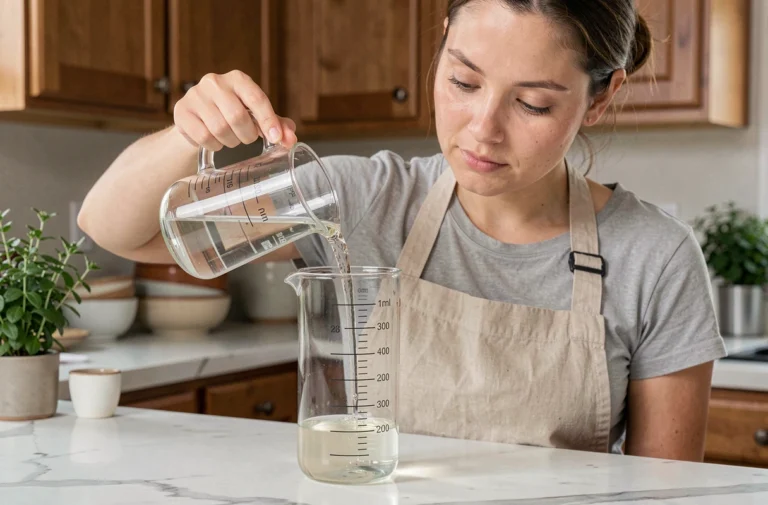
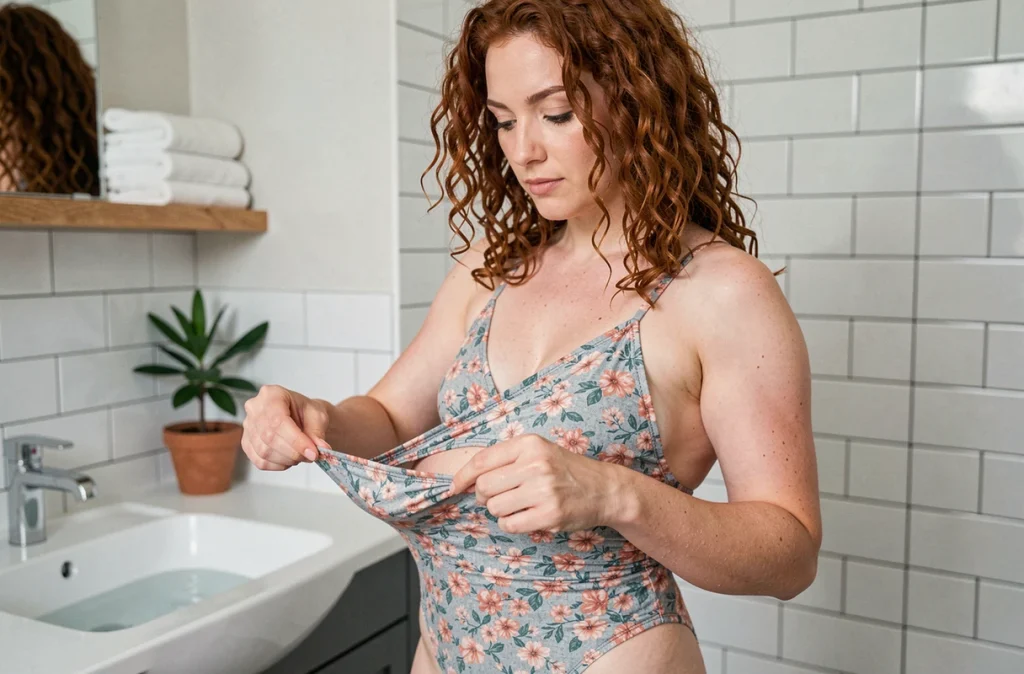
Fill a basin with warm water (never hot to the point of not being able to keep your hand in it). Immerse the swimsuit for about fifteen minutes to allow the fibers to relax. Remove it without wringing it out, and while it is still soaked, gently stretch the areas that are tight.
On the bottom of the swimsuit, pull on the sides of the waist and the thigh openings, holding each stretch for a few seconds. On the top, pull the cups apart laterally and adjust the straps. Each stretch should remain gradual and without jerks to avoid tearing the seams.
Drying flat on a towel
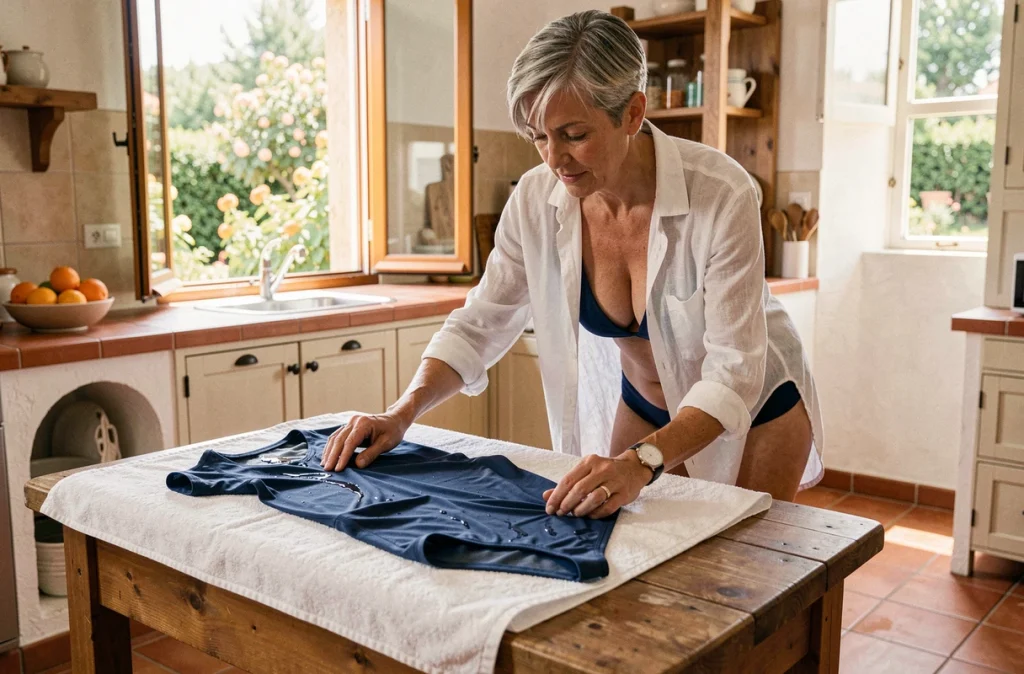
Once stretched, lay the swimsuit flat on a dry towel. Do not hang it on a hanger or a line: the weight of the water would pull the fabric down unevenly. Drying flat helps maintain the shape achieved through stretching. Let it dry in the shade, away from any heat source.
Swimsuit material and expected results
Not all fabrics react the same way to stretching. Before attempting anything, check the composition label.
- Nylon-elastane blend: the most common. It relaxes well in warm water, with a noticeable gain in ease from the first handling. Be careful, this blend is also the most sensitive to chlorine, which degrades elastane over time.
- Polyester-elastane: more resistant to chlorine and UV, this fabric retains its original shape better. It therefore stretches less easily, but the result lasts longer. For regular use in a pool, this is the most durable composition.
- Fabrics with a low proportion of elastane: some swimsuits contain very few elastic fibers. The stretching will be limited, and the risk of deforming the garment unsightly increases. For these models, it is better to consider a sewing alteration rather than forced stretching.
Sewing alteration to gain half a size
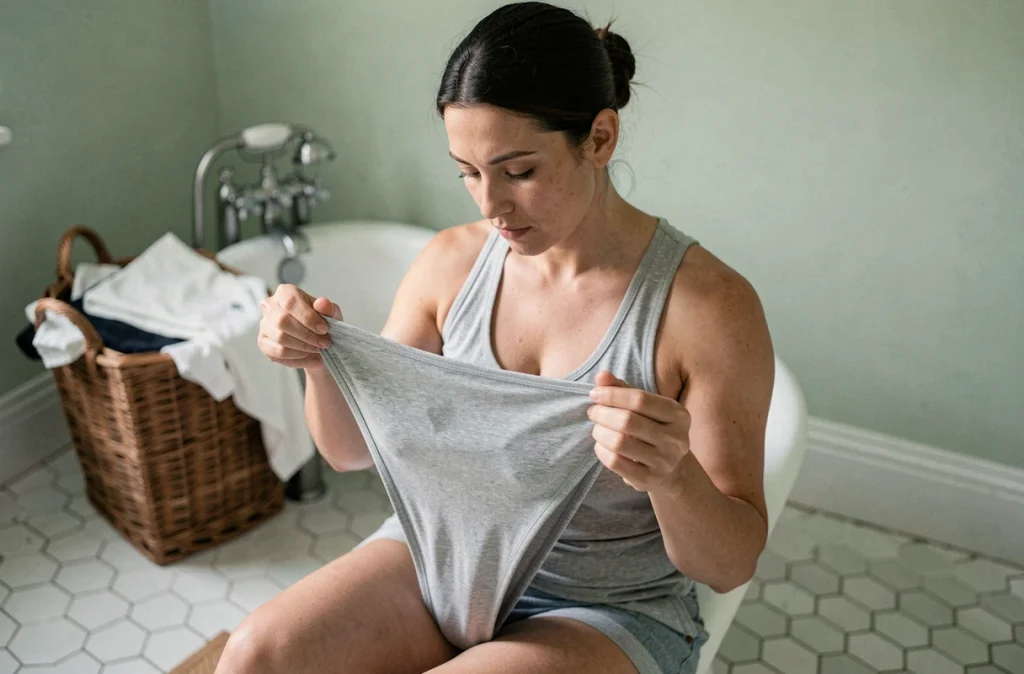
When the gap between the swimsuit size and body shape exceeds mere discomfort (deep red marks, straps cutting into shoulders, rolling waist elastic), textile stretching will not be enough. A tailoring alteration remains the most reliable solution for a swimsuit that is too small by half a size or more.
What a tailor can modify
On the bottom of the swimsuit, it is possible to replace the waist elastic with a softer or slightly longer model. The operation takes little time and costs significantly less than a new swimsuit. On the top, a tailor can lengthen the straps, widen the back by adding a panel, or reposition the hooks.
However, enlarging the cups of a triangle or bandeau top is rarely possible without distorting the cut. If the problem is at the chest level, it is better to choose a suitable model rather than forcing an alteration that will compromise support.
Protecting the elasticity of the swimsuit after relaxation
A swimsuit that has been successfully relaxed deserves appropriate care; otherwise, it risks either tightening again or losing all shape. A few simple habits extend the life of the fabric.
Rinse the swimsuit in cold water immediately after each swim, especially in pools. Chlorine remains the most aggressive factor for elastane: it attacks the elastic fibers and accelerates their aging. A quick rinse removes most chemical residues before they penetrate the fabric.
Always wash by hand, in cold water, with a mild detergent. Machine washing, even on a delicate cycle, subjects the swimsuit to friction and twisting that damage the seams and stretched fibers. The tumble dryer should be avoided in all cases: the heat from the drum causes a loss of elasticity that can become permanent.
Avoid leaving the swimsuit to dry in direct sunlight on a hot surface (lounge chair, concrete, dashboard). UV combined with heat weakens elastane just as surely as chlorine. Prefer drying in the shade, flat, on a clean towel.
A well-maintained swimsuit retains its shape and comfort for several seasons. One that endures tumble drying, residual chlorine, and direct sunlight begins to deform within weeks. The difference between the two comes down to five minutes of rinsing after swimming.