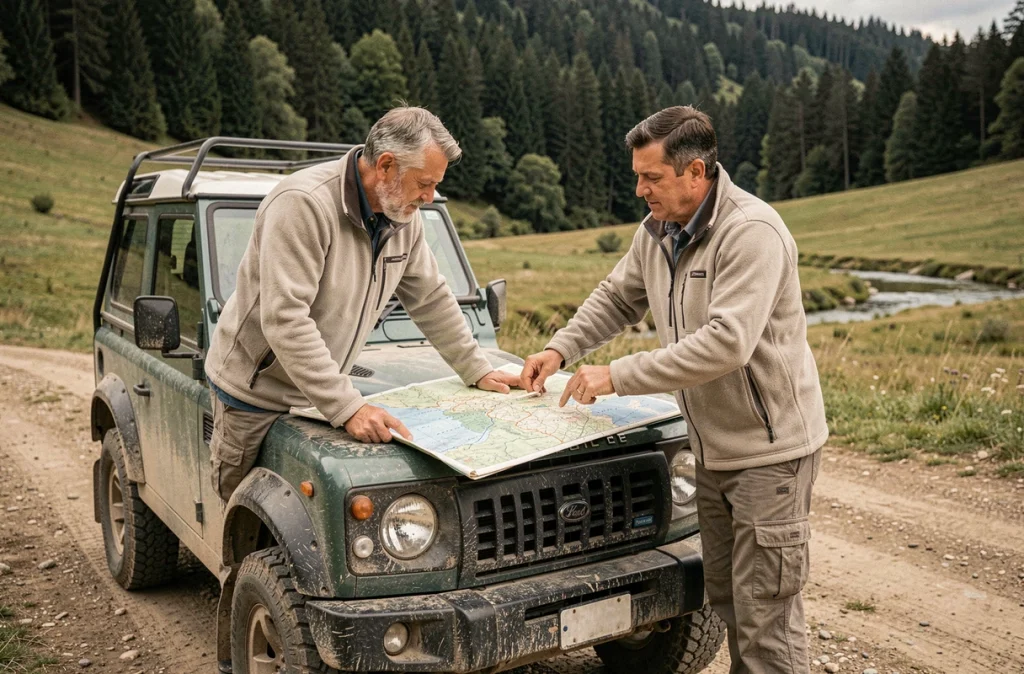
Finding a plot of land to live autonomously is not just about spotting a beautiful parcel with an unobstructed view. The choice depends on often underestimated technical constraints, starting with sanitation, local regulations, and the actual quality of the soil. Even before consulting listings, a precise analysis grid can prevent costly mistakes.
Non-collective sanitation: the criterion that filters plots above all else
Most rural plots targeted for an autonomy project are not connected to the sewage system. Non-collective sanitation then becomes a structuring constraint, well before surface area or price.
The technical requirements reiterated in 2026 emphasize the need for a site-specific soil study to characterize permeability, groundwater depth, topography, and available drainage. A compact clayey plot or a steeply sloped parcel without natural drainage can make the installation of a drainage system technically impossible or disproportionately costly.
In practical terms, this means that an attractive plot on paper (low price, large area, isolation) can turn out to be unusable if the soil does not allow for the infiltration of treated water. Several buyers discover this problem after signing, which is increasingly becoming a reason for disputes over hidden defects during resales. Requesting a sanitation diagnosis before any sales promise is a reflex to adopt systematically, especially to find autonomy advice with Immo Relax that details this step.
Local regulations and natural areas: what the PLU really imposes
A plot located in a natural area (zone N of the PLU) does not offer the same construction rights as an agricultural or buildable zone. Restrictions can go as far as a total prohibition on any construction, including a simple garden shed.
In 2025-2026, legal analyses remind us that a parcel close to a watercourse may be subject to a prefectural authorization or declaration under water police regulations. There is no universal distance set by the urban planning code: the constraint depends on the municipal PLU, prefectural orders, and natural risk prevention plans.
Checking the exact zoning of the parcel at the town hall remains the only reliable approach. Online urban planning documents are not always up to date, and a parcel may have changed classification during a recent PLU revision. For an autonomy project involving a vegetable garden, a water source, and a house, this verification conditions everything else.
Mountain Law and specific constraints at altitude
Plots located in mountain areas are subject to reinforced urban planning rules. The Mountain Law regulates urbanization in continuity with existing buildings, which strongly limits installation on isolated plots at altitude. Autonomy projects in the mountains must also take into account constraints related to water storage and access to public services.
Soil quality and access to water: the two technical pillars of autonomous land
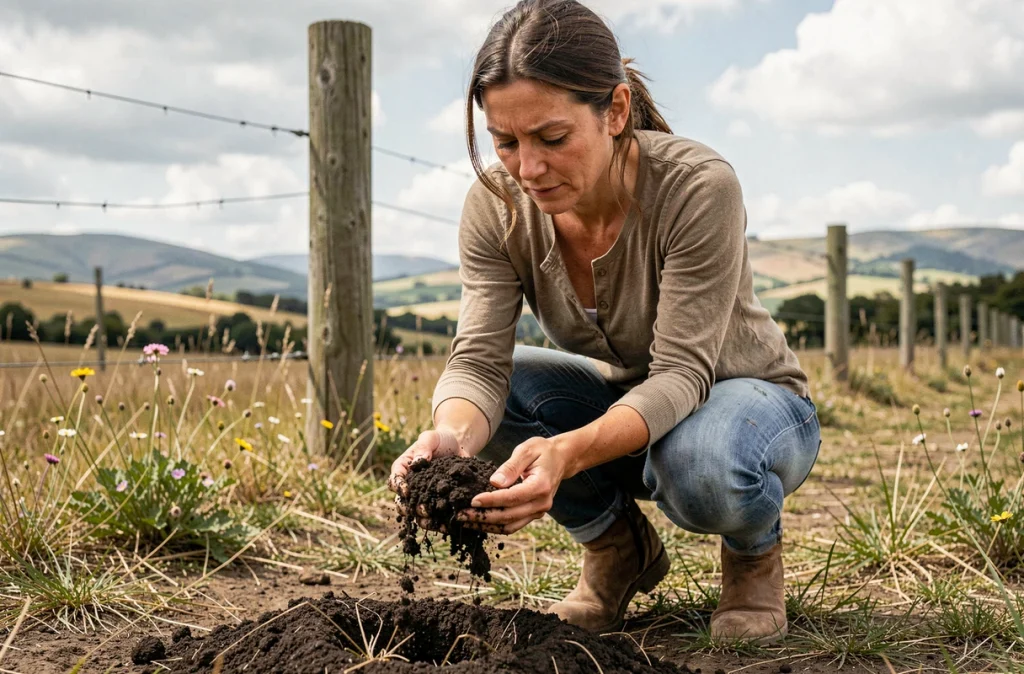
A plot intended for food autonomy must be able to nourish its occupants. Soil quality is not an aesthetic detail; it is a measurable agronomic parameter.
- The soil texture (sandy, loamy, clayey) determines its ability to retain water and nutrients. Soil that is too sandy drains too quickly, while soil that is too clayey suffocates roots in winter.
- The soil pH directly influences possible crops. Very acidic soil is suitable for blueberries but not for common vegetable garden crops without lime amendment.
- The depth of topsoil conditions rooting. Less than thirty centimeters of soil before reaching bedrock significantly reduces yields.
- The presence of a spring, well, or watercourse on the parcel radically changes the project. Without autonomous access to water, self-sufficiency remains theoretical.
Having a soil analysis conducted by an agronomic laboratory before purchase costs little compared to the price of the land and prevents discovering afterward that the soil is sterile or polluted by decades of conventional agriculture.
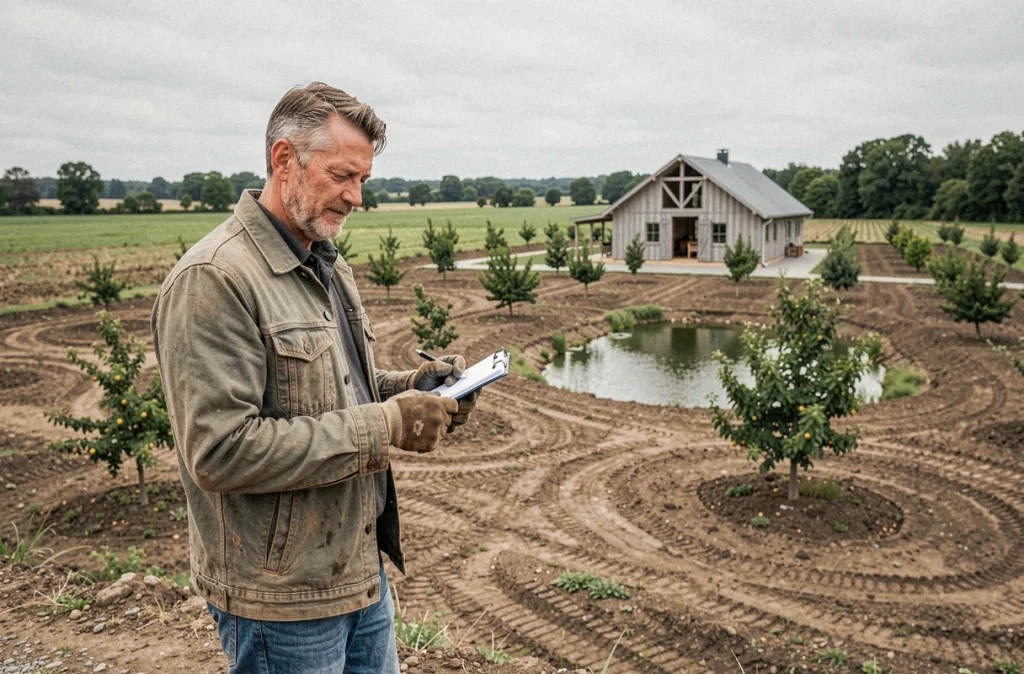
Required area for autonomous land: beyond the fantasy of large spaces
The question of area comes up systematically. Field feedback varies on this point because the answer depends on local climate, soil quality, the number of people to feed, and the degree of autonomy sought.
A well-managed vegetable garden on a few hundred square meters can cover a significant portion of a family’s vegetable needs. In contrast, energy and firewood autonomy requires a much larger forested area than just the cultivable space. Wood remains the most accessible energy source in isolated rural areas, but it takes several years of rotation to exploit a wooded parcel without depleting it.
Buying too large also generates problems: costly maintenance, higher property taxes, time-consuming clearing. It is better to have a modestly sized plot with good soil than a large parcel of unproductive heathland.
Exposure, climate, and natural risks: often overlooked variables
The orientation of the plot determines the sunlight exposure of the vegetable garden and the solar potential for electricity production. A north-facing slope in a temperate zone receives significantly less direct light, which penalizes both crops and photovoltaic panels.
The microclimate of the parcel is as important as the regional climate. A valley bottom freezes earlier and more often than a south-west facing slope. Late frosts in spring destroy early sowings and flowering fruit trees.
- A bowl-shaped plot accumulates moisture and cold, favoring fungal diseases on plants.
- A plot exposed to prevailing winds without a windbreak hedge increases heating needs for the house.
- The proximity of a flood zone, even seemingly distant from the watercourse, must be checked on the risk prevention plan.
Consulting local climate data and visiting the plot in different seasons allows for the evaluation of these parameters. A single visit in good weather is not enough to judge a plot.
The choice of a plot for autonomous living relies on a series of technical verifications that the enthusiasm for the project sometimes makes one forget. Sanitation, zoning, soil quality, and exposure are filters to apply before committing, not after. A plot that meets these technical criteria, even modestly, offers a more solid foundation than a large property bought on instinct.